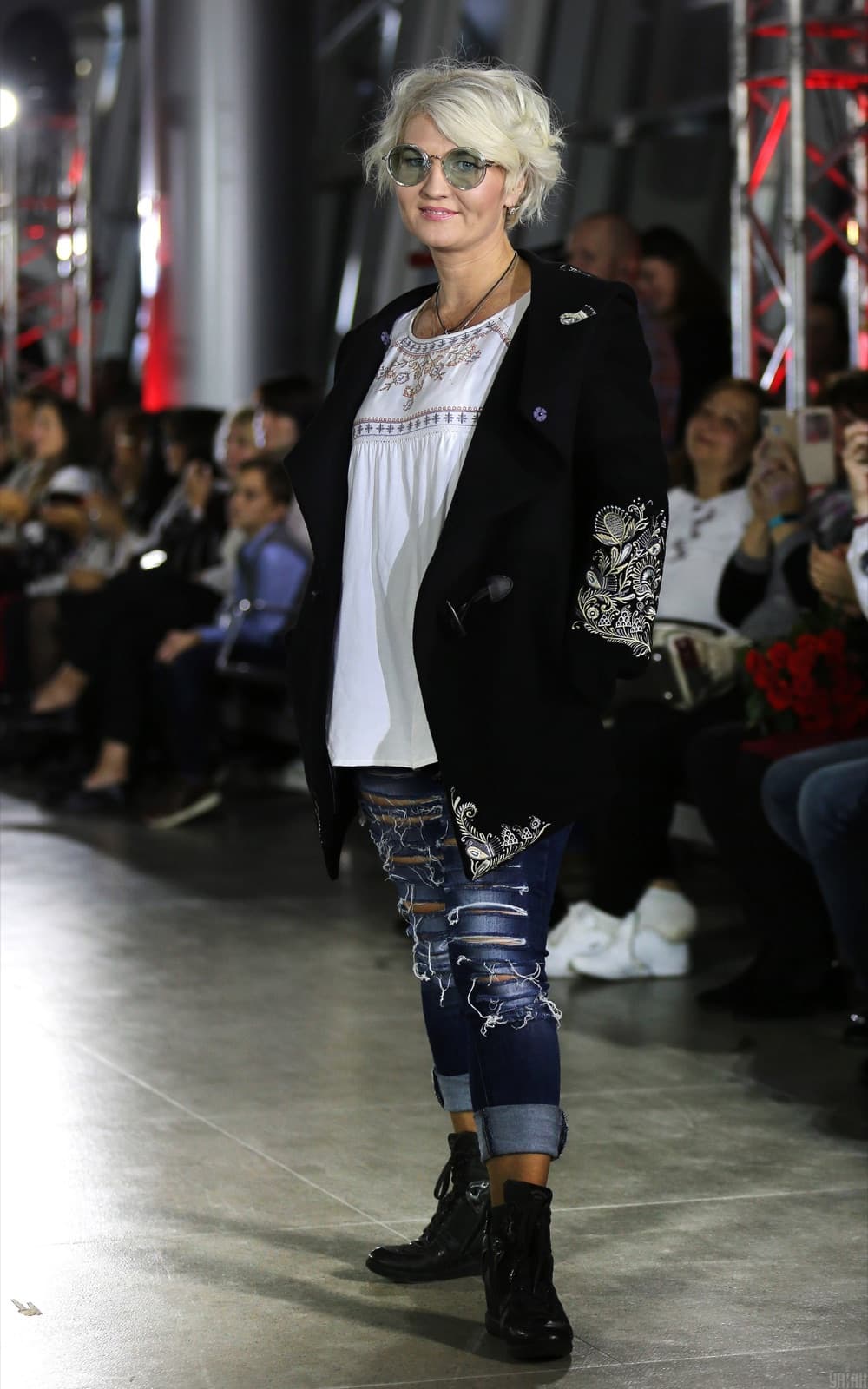
For fifteen years before the war, Nataliia ran a restaurant. Then Maidan happened — and she spent ninety unforgettable days there in the winter of 2013-14. Somewhere between the square and the war that followed, she closed everything she could close, sold what she could sell, and never went back.
The exact day she stopped pretending the war hadn't reached her was July 10, 2014. Her sister's husband, Dmytro Kuzmin, was killed that day in an enemy ambush as his unit pulled out of Karlivka. He was driving. Two sniper rounds found the gap in his plate carrier. Two months earlier, on May 2nd, Dmytro had set down his rifle at the so-called referendum in Krasnoarmiisk and walked into a hostile crowd to try to talk them out of it. The brigade gave him the callsign Миротворець— Peacemaker. Before he left for the front, he had stopped by his wife's house and begged her to bless the rifle they had issued him, so that, God forbid, it would never fire on a child or a civilian. He left two small boys: Vanya, four, and Misha, six. “After his death,” Nataliia says, “I understood I had to do something too.”
The first trip east wasn't planned. A friend was leaving for the front and handed her his keys. “Make a volunteer center out of the house,” he said. “I'm going to fight.” The house was in the village of Hnidyn, in the Boryspil district outside Kyiv. Within weeks, the local school had joined in. Neighbours were weaving camouflage nets in the kitchen. Children were making crafts that the village sold at fairs to buy supplies for the troops. The musical group from Hnidyn sang at those fairs. A war, suddenly, had a quiet civilian engine room.
Then came the convoy from Zakarpattia — three vehicles, three drivers, a 20-ton truck picking up donations at every stop along the way. “If one of us breaks down,” one of the drivers said, “there's no one to take the wheel.” Nataliia called her mother from the road: “Mom, my car is staying in Boryspil. I'm going to the front.” They took turns at the wheel. That was her first delivery. There have been thousands since.
“We don't ship to warehouses. We ship to people we know, by name.”
Some of those names don't come home. Lyosha Boldyriev — callsign Малиш, the Kid — was the soldier who raised the flag at the meteorological station above Donetsk airport. He survived the airport. He died on a mine near Pisky in December 2015, in what counted then as a quiet stretch of the war. The Facebook post he left behind has stayed with Nataliia: “People, if you're tired of the war, rest. You didn't make us fight for you. We'll fight for you.”He had been writing a book about the airport. Some evenings he'd lock himself in his room to do it.
The stories pile up. There's the birthday cake she carried into a house in Bucha to sing Happy Birthdayto a soldier on the front, just before 260 rounds of heavy artillery fell on the yard outside. The basement saved them. There's the bet on the bridge they called Bastion in 2016 — a fortified river crossing that, despite being covered in mines, stood somehow undamaged through the war. The deal was simple: the battalion would push the enemy back, and if they did, Nataliia would dance the tango on the bridge. The enemy was pushed back. She danced.
At one point Ukraine's Ministry of Information Policy launched a project called Invite Me Out of the War — volunteers and journalists asked servicemen to dance. The image she remembers most is Oresta Brid leading Dima Kraslyansky in a Cuban salsa. The first time he stood on his prosthetic leg, he danced.
By 2017 the supply runs alone weren't enough. Soldiers were coming back from rotations carrying things that vehicles and medical kits couldn't fix. Nataliia started quietly pulling men off the front during their leave and bringing them to a rehab center in Kyiv — unofficially at first — where she sat with them and walked them through what was possible: a course, a psychologist, a psychiatrist, time. From there came the free art-therapy classes for veterans. And then the dream of a permanent center she could run herself.
The space showed up the way most things in this story do — by accident. A chance conversation with a woman named Yevheniya. “I'm planning my work in this field. It fascinates me — but it's all just planning, no real ground yet.” “I have a building.” Today the two of them keep that center running together. Veterans come through every day for yoga, English classes, art therapy, psychological support, and four halls — including one for dancing. The men, still, love to dance.
Twelve years on, Heart of the World Ukraine moves civilian aid, generators, vehicles, medical supplies, and rehabilitation programs across the country — multi-day retreats, trauma-informed yoga, art therapy for veterans and the families who hold them. The house in Hnidyn became the Mad Crew. Skažený ekipaž. The reckless, relentless people who don't stop.
Nataliia rarely sits down for interviews. The three below are exceptions — a longer conversation with the Ukrainian outlet Живе Місто (Living City) about how she ended up at the front in the first place; a news segment from КИЇВ24 walking through the rehab center as it works today; and a shorter, harder one with Gazeta.ua about the boys who didn't come back. All three are in Ukrainian; an English caption strip runs live below each video.
In her own words, helping people doesn't make us heroes. It just makes us normal.